
Ankle Brachial Index Test in Lexington, KY
Examine Leg Circulation for Non-Healing Wounds


Assessing Arterial Blood Flow in Your Legs
Peripheral artery disease (PAD) can narrow the arteries and limit blood flow to your legs and feet. Some people experience leg pain during activity, while others may have no clear symptoms. However, diabetes and smoking can increase the risk of PAD.
At our wound care clinic in Lexington, we consider whether circulation problems may affect wound care decisions. ABI testing provides useful information about arterial health and can help identify when you may need a vascular specialist or additional testing.
When Is an ABI Test Recommended?
Mohammed Athar, MD, may recommend an ankle-brachial index test if you have a foot wound, diabetes-related foot concerns, or symptoms of poor circulation. ABI testing is quick and non-invasive. We offer testing at our Lexington clinic, and home visits for eligible homebound patients in Berea, Danville, Winchester, and nearby areas.

Arterial Leg Ulcers

Diabetic Foot Wounds

Non-Healing Leg Wounds

Leg Pain When Walking
Venous Leg Ulcers
What to Expect During Your ABI Test in Lexington
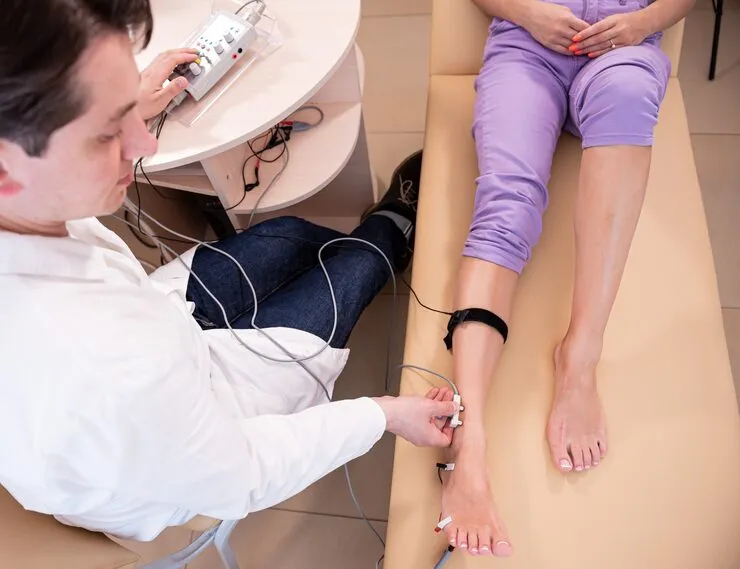
Rapid Recovery Wound Care, PLLC uses a simple ABI test procedure that compares blood pressure in your arms and ankles. Your ABI is a ratio: the ankle pressure divided by the arm pressure. Our team follows a step-by-step process to take the measurements, calculate your ABI, and help Dr. Athar evaluate arterial health in your legs.
Rest Before Testing
Lie flat and rest for at least five minutes before we begin measurements.
Position the Cuffs
We place blood pressure cuffs around your arms and ankles.
Take the Measurements
The handheld Doppler device measures blood pressure to calculate your ABI result.
Review Your Results
We review your ABI values and explain whether you need further assessment.

Understanding Normal & Abnormal ABI Results
Your ABI results help Dr. Athar assess blood flow in your leg arteries and plan your care. He considers your results alongside your symptoms, wound condition, and medical history to decide whether you need further testing or advanced wound care.
- Normal (1.00–1.40): Blood flow may be adequate.
- Borderline (0.91–0.99): Further evaluation may be needed.
- Abnormal (0.90 or below): May indicate reduced blood flow.
- High (above 1.40): The arteries may be stiff or hardened, which can affect the reading, so additional testing may be needed.
ABI Testing Options for Clinic and Home Visits
ABI measurements take just minutes. We offer in-office testing in Lexington and home visits for eligible homebound patients nearby.
Frequently Asked Questions
What areas do you serve for ABI testing?
We offer in-office ABI testing in Lexington, KY, and home visits for patients in surrounding service areas, including Nicholasville, Georgetown, Winchester, Versailles, and surrounding areas. Contact our clinic to confirm availability in your area.
Does insurance cover an ABI test?
Coverage depends on your insurance plan, the reason for testing, and medical necessity requirements. Contact your insurer and our office to confirm your coverage and any possible costs.
What is an ankle-brachial index test?
An ankle-brachial index test compares blood pressure at your ankles and arms. It helps assess how well blood reaches your legs and can identify signs of peripheral artery disease (PAD).
Does an ABI test hurt?
No. ABI testing is generally painless. There are no needles or cuts, though you may feel pressure as the cuffs tighten around your arms and ankles.
Do I need an ABI test for a wound that will not heal?
An ABI test may help if poor circulation could be affecting a leg or foot wound. Dr. Athar can assess your wound and decide whether the test is appropriate.
What are three signs of peripheral arterial disease?
Three common signs of PAD are leg pain when walking, cold feet, and wounds on the feet or legs that take a long time to heal. An ABI test for peripheral artery disease can help examine vascular health and identify signs of reduced circulation.