Skin Substitutes for Wounds in Lexington, KY
Advanced Wound Care to Help Rebuild Damaged Skin

What a Skin Substitute Does for Your Wound
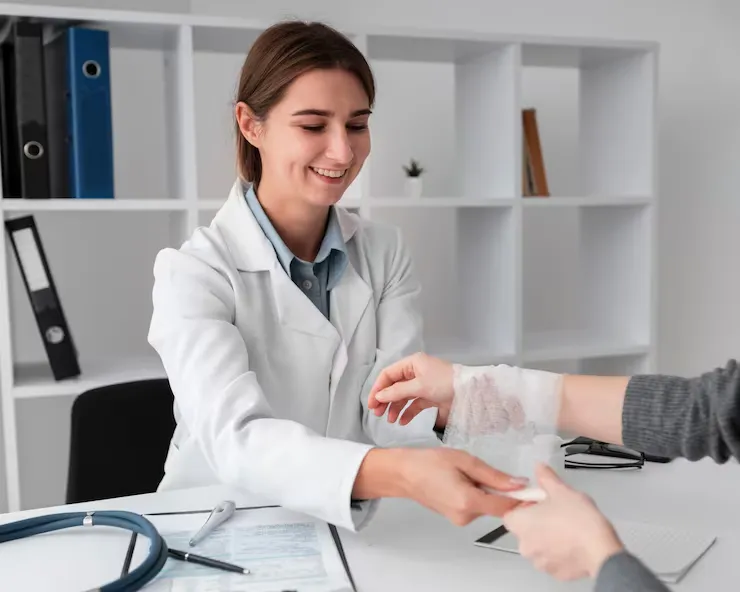
A healing wound moves through steps. It clears out damage, builds new tissue, then closes with fresh skin. A stuck wound never gets past the first step. Poor blood flow, high blood sugar, or constant swelling can damage the wound base, so new skin has nothing to grow on. Dressings alone cannot fix that.
At Rapid Recovery Wound Care, PLLC, we offer skin substitutes for wounds for Lexington patients. We place a thin layer made in a lab or from human or animal tissue on your clean wound, and your cells grow into it to build new tissue. It works with standard wound care and may be reapplied over several visits.
Types of Skin Substitutes
The right skin substitute depends on your wound. Skin substitutes, also called cellular and tissue-based products (CTPs) or biologics, are used on chronic wounds such as diabetic foot ulcers and venous leg ulcers. The type chosen depends on the wound and how it has responded to treatment so far.
Bioengineered Cellular Products
Acellular Dermal Matrices
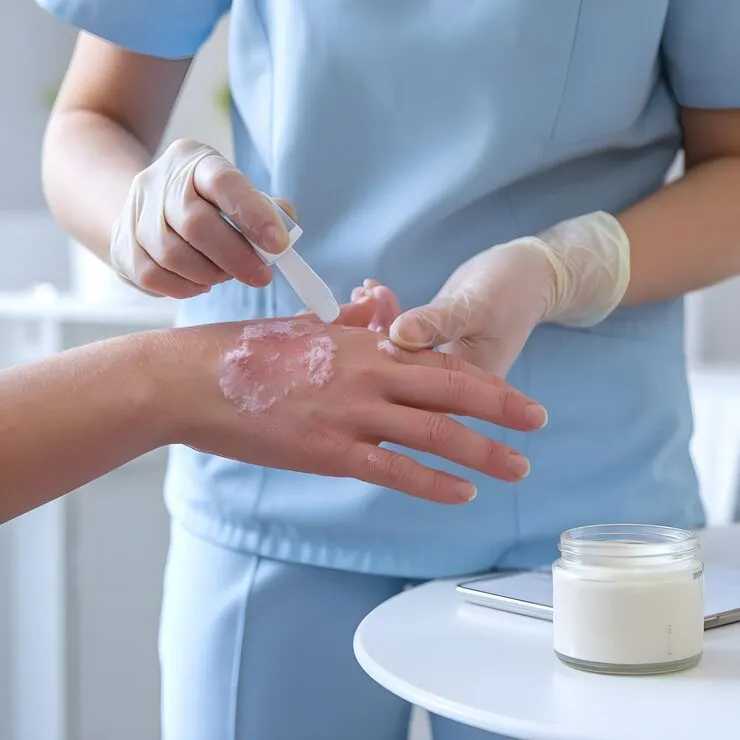
Amniotic and Placental Grafts
Collagen-Based Wound Matrices
Synthetic Wound Matrices
We Follow a Set Procedure Before Every Application
Before we apply a skin substitute for wounds in Lexington, Mohammed Athar, MD, prepares your wound. Preparation matters most for stalled wounds that have not responded to standard care, because a product placed on a poorly prepared wound is less likely to work.
Clean wound bed
First, we clear dead tissue so the product meets healthy tissue.
Infection controlled
Then, we perform infection screening and treat (if you have infection) it before placing CTP.
Blood flow checked
We assess blood circulation using ABI testing to ensure adequate blood flow reaches the wound.
Pressure relieved
Finally, we show you how to keep pressure off the wound at home.
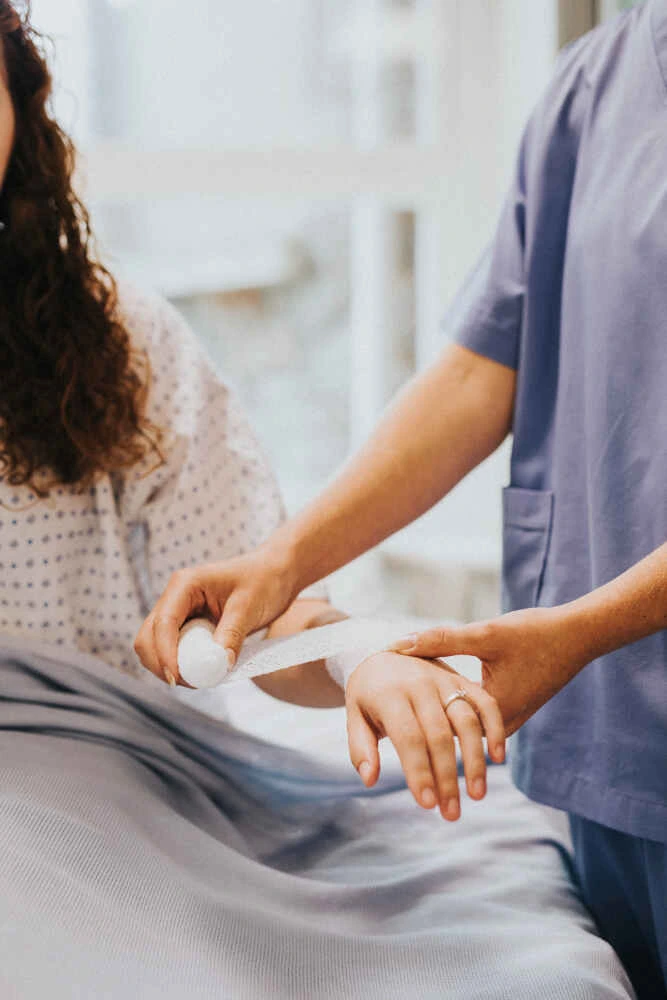
Rebuild the Tissue Your Wound Cannot Rebuild
Not sure if a skin substitute is right for your wound? Call our Lexington clinic to schedule an evaluation, or ask about house-call visits for eligible homebound patients.
Frequently Asked Questions
What is a skin substitute for a wound?
A skin substitute is a product placed on a wound to help it grow new tissue. Some are lab-made, and others are tissue-based. Clinicians use them alongside standard care, such as cleaning, dressings, and pressure relief, when a wound stops improving.
Does Rapid Recovery Wound Care accept insurance?
Yes, we do accept major insurance plans. Please contact our wound care clinic to confirm your insurance coverage for skin substitutes in Lexington KY. Coverage may depend on your insurance plan, wound type, and medical eligibility.
Who is a good candidate for a skin substitute?
Skin substitutes are generally considered for wounds that have stalled despite standard care, such as diabetic foot ulcers or venous leg ulcers. Dr. Athar evaluates your wound, circulation, infection status, and overall health before recommending one.
How long do skin substitutes take to work?
Healing time varies. Many wounds need several weeks to show steady progress, and some take longer. Wound size, depth, blood flow, and blood sugar all affect the pace.
Is a skin substitute the same as a skin graft?
No. A skin graft moves healthy skin from another part of your body to the wound, which creates a second wound site. On the other hand, skin substitutes are lab-made or tissue-based products that don’t require doctors to take skin from your body.
How many applications and follow-up visits will I need?
The number depends on your wound and how it responds. Some wounds need repeat applications, with follow-up visits in between to measure healing.